Metal roofing has become one of the most requested upgrades for St. Petersburg homes, and for good reason. It stands up to high wind, reflects heat, and can outlast several shingle roofs over its lifetime. The tradeoff is a higher upfront price, and quotes for what sounds like the same roof can vary widely from one contractor to the next.
Understanding what goes into metal roofing cost in St. Petersburg, FL makes it much easier to judge whether a number is fair. Below, we cover typical price ranges by system type, the material choices that move the price, how salt air affects your options, and the questions worth asking before you sign.
How Much Does a Metal Roof Cost in St. Petersburg?
For an average home with 2,000 to 3,000 square feet of roof surface, most metal roofs in St. Petersburg land somewhere between $18,000 and $50,000 installed. Where yours falls depends mainly on the panel system and the metal itself.
Exposed Fastener Panels
Often called 5V crimp or ribbed panels, these are fastened with screws driven through the face of the metal. They typically run $8 to $12 per square foot, or about $18,000 to $32,000 for an average home. They’re the most affordable metal option, though the screw washers need to be checked and eventually replaced over the life of the roof.
Standing Seam Steel
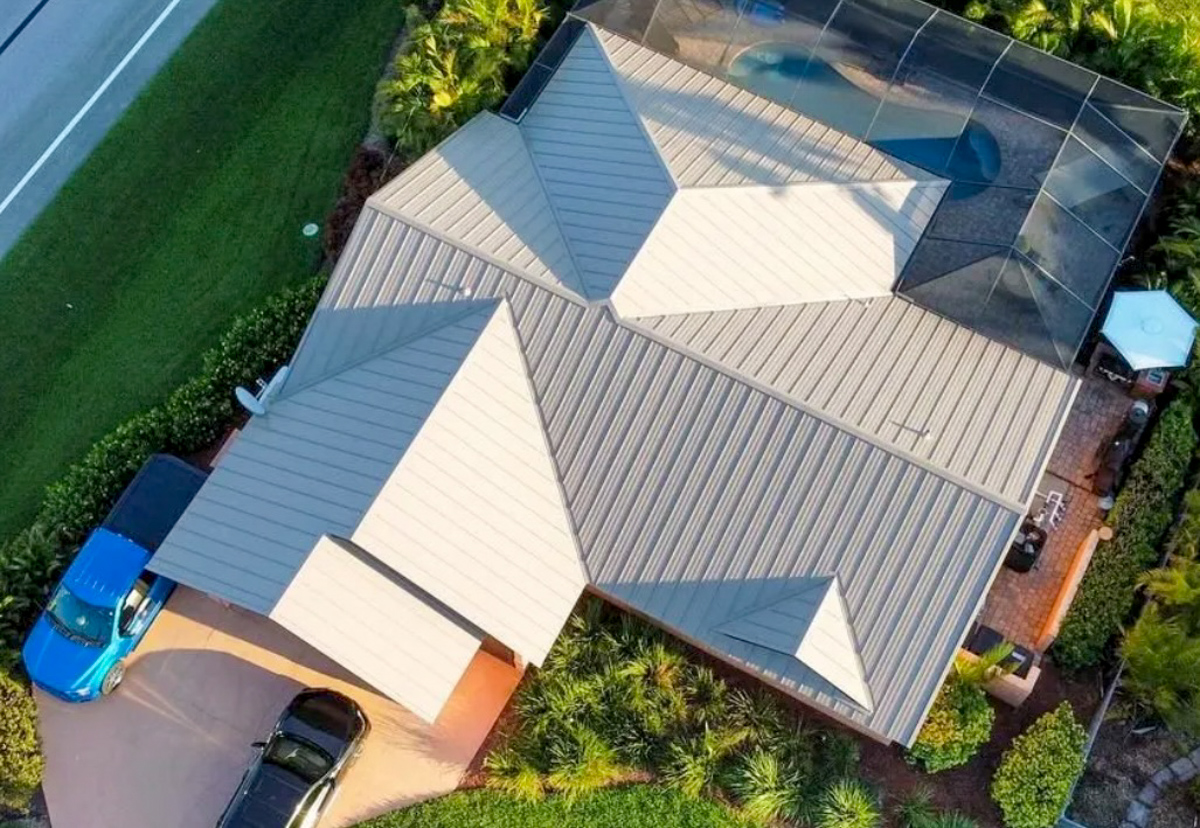
Standing seam panels lock together at raised seams, with fasteners hidden underneath. Steel standing seam generally costs $11 to $16 per square foot, or roughly $25,000 to $42,000. The concealed fasteners mean fewer potential leak points and a cleaner look.
Standing Seam Aluminum
Aluminum standing seam usually runs $14 to $20 per square foot, or about $30,000 to $50,000. It costs more than steel, but it won’t rust, which matters for homes close to the water.
Stone-Coated Steel
If you want metal performance with the look of tile or shake, stone-coated steel roofing typically falls between $10 and $15 per square foot.
These ranges include tear-off of a single existing layer, underlayment, trim, and standard flashing. Decking repairs and code-required upgrades are usually priced as separate line items.
Roof shape can push any of these systems toward the top of its range. Steep pitches, multiple valleys, dormers, and skylights all require more custom trim and careful seam work, which adds labor time compared to a simple gable roof.
Why Metal Roof Prices Vary So Much Between Quotes
Two metal roofing quotes can look similar on paper and still be thousands of dollars apart. In most cases, the difference comes down to materials and details that aren’t obvious unless you know to ask about them.
Panel thickness is one of the biggest factors. Metal is measured in gauge, and a lower number means thicker metal. A 24-gauge panel is sturdier and more dent resistant than a 26- or 29-gauge panel, and it costs more as a result. Thinner panels can work in some applications, but they’re more likely to show oil canning, a visible waviness across flat sections of metal.
The paint finish matters just as much. Premium finishes hold their color and resist chalking far better under Florida’s intense UV exposure than economy coatings do. A cheaper finish may look identical on installation day and noticeably faded a decade later.
Underlayment is another quiet cost driver. Metal roofs get hot, and a high-temperature synthetic underlayment is designed to handle that heat without breaking down. Some lower bids use standard underlayment to save money, which can shorten the life of the system underneath the panels.
Trim and flashing also vary. Custom-bent trim fabricated to fit your roof costs more than generic pieces, but it seals transitions more reliably. Finally, metal is less forgiving to install than shingles. Panels expand and contract with heat, and clip spacing, fastener placement, and seam work all need to be right. If you’re still deciding between panel styles, our breakdown of standing seam vs. corrugated metal roofing explains the differences in more detail.
Steel vs. Aluminum: Choosing the Right Metal for St. Petersburg’s Salt Air
St. Petersburg is surrounded by water on three sides, so salt exposure is a real factor in choosing a metal roof. Salt-laden air settles on roofs and accelerates corrosion on metals that aren’t designed for it. Here’s how we help homeowners weigh the options:
- Galvalume steel: Steel coated with a zinc and aluminum alloy is strong, cost-effective, and a solid choice for most homes that aren’t directly on the water.
- Aluminum: Aluminum doesn’t rust, making it the better fit for waterfront homes and properties that take regular salt spray. It’s a softer metal and costs more, but it holds up where steel struggles.
- Finish quality on both: A premium paint system adds a layer of protection and keeps color consistent over time, regardless of which metal sits underneath.
- Matching fasteners and trim: Mixing incompatible metals can cause galvanic corrosion, so fasteners, flashing, and trim should be compatible with the panels.
- Warranty fine print: Some manufacturer finish warranties limit coverage within a certain distance of salt water, so it’s worth confirming before you choose a product.
Spending more on aluminum only makes sense when your home’s exposure calls for it. For many homes a few miles inland, quality galvalume steel delivers excellent performance at a lower price. We’ll tell you honestly which one fits your location, even when the answer is the less expensive option. Distance from the water, prevailing wind direction, and how often salt spray reaches your roof all factor into that recommendation.
What the Higher Upfront Price Gets You
Metal roofing costs more on day one, but the comparison changes when you look at the full life of the roof. A well-installed metal roof can last 40 years or longer in Florida, while asphalt shingles typically need replacing every 15 to 20 years. That means many homeowners would replace a shingle roof twice in the time one metal roof stays in service.
Consider a simple example. A $36,000 metal roof that lasts 45 years works out to about $800 per year. A $17,000 shingle roof that lasts 17 years comes to about $1,000 per year, before accounting for inflation on the next replacement. The exact numbers will vary, but the pattern holds for most homeowners who plan to stay put.
Storm performance is another part of the value. Metal systems can carry high wind ratings, and interlocking panels give wind fewer edges to catch than individual shingles. That can mean fewer repairs after tropical storms and a roof that’s better positioned for the next hurricane season.
Energy savings add up too. Reflective metal finishes bounce back much of the sun’s heat, which can reduce attic temperatures and ease the load on your air conditioning through long Florida summers. Insurance can also factor in, since a newer roof built to current code may help you qualify for wind mitigation credits.
Maintenance costs tend to stay low as well. Metal doesn’t curl, crack, or lose granules the way shingles do. A periodic check of flashing, sealants, and any exposed fasteners is usually all a well-installed system needs, and many years can pass between meaningful repair bills.
If you’d like to see how these benefits apply to your home specifically, our metal roofing page covers the systems we install and how we approach each project.
Questions to Ask Before You Sign a Metal Roofing Quote
A detailed quote protects you from surprises and makes it easier to compare contractors fairly. Before you commit, make sure you can answer these questions:
What Gauge and Finish Are Included?
Ask for the panel gauge and the specific paint system in writing. These two details explain a large share of any price difference between bids.
What Underlayment Will Be Used?
Confirm that the underlayment is rated for the high temperatures metal roofs reach in Florida.
How Is Decking Damage Priced?
Rotted decking only shows up during tear-off, so the quote should list a per-sheet replacement price up front.
Who Will Actually Install the Roof?
Metal installation rewards experience. Ask whether the contractor uses its own trained crews or subcontracts the labor. Our in-house team handles every installation directly, with supervision on site throughout the job.
What Warranties Come With It?
Ask about the material warranty, the finish warranty, and the workmanship warranty separately, since each covers something different. As a Metal Roofing Alliance member, we’re happy to walk you through what each one means in plain terms.
What Is the Project Timeline?
Ask how long installation will take, how weather delays are handled, and how your property will be protected during tear-off. Most residential metal roofs take several days to complete, depending on size, complexity, and whether custom trim needs to be fabricated first.
Metal Roofing Cost Recap for St. Petersburg Homeowners
Metal roofing is a bigger upfront investment, but it’s one that often pays for itself over time. Here’s what to remember as you budget:
- Most St. Petersburg metal roofs fall between $18,000 and $50,000 for an average home.
- Exposed fastener panels cost the least, while standing seam aluminum sits at the top of the range.
- Gauge, finish, underlayment, and trim explain most of the differences between quotes.
- Aluminum is worth the extra cost near salt water, while galvalume steel suits most inland homes.
- Cost per year of service often favors metal for homeowners planning to stay long term.
- Ask for the gauge, finish, and underlayment details in writing before you sign.
Metal is one of several options we install as part of our residential roofing services, and the right choice always depends on your home, your budget, and how long you plan to stay.
Find Out What a Metal Roof Will Cost for Your Home
Every roof is different, and the only way to get a reliable number is to start with a real look at yours. Our team will inspect your current roof, check for decking or ventilation concerns, and explain which metal system makes the most sense for your location and goals. We serve homeowners throughout St. Petersburg and Pinellas County with in-house crews and owner oversight on every job. You’ll get a detailed, line-by-line quote with no guesswork. Schedule an inspection today and see what a metal roof would look like for your home.
Ready for an expert opinion? Get in touch today!
Whether you’re dealing with an aging roof or just want peace of mind, having the right team on your side makes all the difference. Our St. Petersburg roofing experts are ready to answer your questions and help you find the best solution for your home. Schedule an inspection today and take the first step toward a stronger, more reliable roof.
Like this article? Spread the word!
Related Posts

Standing Seam vs. Corrugated Metal Roofing: What Tampa Bay Homeowners Should Know
Standing seam vs corrugated metal roofing: which fits your Tampa Bay home best? Schedule…
Metal Roofing vs. Asphalt Shingle: Which Is Right for Your St. Petersburg Home?
Metal roofing vs. asphalt shingle for your St. Petersburg home: compare storm…
Flat Roof Repair Cost in St. Petersburg: TPO vs. Modified Bitumen
Flat roof repair cost in St. Petersburg varies by system. Compare TPO and modified…