

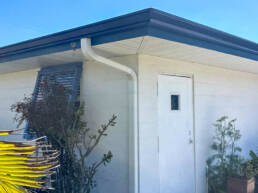
Gutter Installation in St. Petersburg, FL
A roof sheds a remarkable amount of water during a summer storm, and all of it has to go somewhere. Gutters collect that runoff at the roof edge and carry it away from the house. When they are undersized, clogged, or pulling loose, water spills over the edge and lands right where it does the most damage: against the fascia, along the walls, and at the base of the foundation.
We install and replace gutters for homeowners in St. Petersburg and Sarasota, with in-house supervision on every job. Because gutters attach directly to the roof edge, we look at the whole drainage system, from the shingles or panels down to where the water leaves the downspout, so the new gutters work the way they should.
What Gutters Protect
Gutters do more than keep rain from pouring off the roof onto your head at the front door. They protect several parts of the home at once.
The Roof Edge and Fascia
- Keep water from running behind the drip edge and soaking the fascia boards
- Reduce rot along the rafter ends and the bottom edge of the roof deck
- Help prevent stains and moisture damage on the underside of the overhang
The Walls, Foundation, and Yard
Without gutters, roof runoff falls in a line along the house and splashes back onto the siding and windows. Over time, that water can wash out soil and mulch, undermine walkways and pool decks, and collect near the foundation. Sandy Florida soil drains quickly, but concentrated runoff from a roof still erodes it and can lead to settling around slabs and patios. Directing water to the right spot keeps the area around your home stable and dry.
Seamless Aluminum Gutters
Seamless aluminum gutters are the most common choice for Florida homes, and for good reason. Instead of joining short sections together, seamless gutters are formed to length on site, so each run is one continuous piece from corner to corner. The only joints are at the corners and downspout outlets.
Fewer seams means fewer places for leaks to start. Traditional sectional gutters rely on sealant at every joint, and in our heat and humidity that sealant breaks down over time. Aluminum also holds up well in a coastal climate because it won’t rust, and it is light enough that it doesn’t strain the fascia it hangs from. Factory-finished colors let the gutters blend with your trim or stand out as an accent, with no painting required.
Choosing the Right Gutter Size and Style
Not every roof drains the same way. A steep roof with a large surface area moves water much faster than a low-slope roof over a small addition, and the gutter has to keep up.
What We Consider
- Roof size and pitch: Larger, steeper roofs push more water into each run and often need a wider gutter
- Gutter width: 6-inch gutters handle the heavy downpours of a Gulf Coast summer better than standard 5-inch gutters on many homes
- Profile: K-style gutters suit most modern homes, while half-round gutters fit some traditional and coastal styles
- Roof material: Metal roofs shed water and debris quickly, which affects gutter sizing and the need for guards
We size the system to your roof rather than defaulting to one option for every home.
Downspouts and Gutter Guards
A gutter is only as good as the path the water takes after it leaves the roof. Downspouts need to be placed and sized so water drains out before it backs up, and the outlets should send runoff away from the house rather than dumping it at the base of the wall. Extensions, splash blocks, or redirects can carry water clear of the foundation, landscaping, and walkways.
Gutter guards help keep leaves, pine needles, palm debris, and roof granules out of the gutters. Homes under oaks or palms often see gutters fill up within weeks, and clogged gutters overflow just like having no gutters at all. Guards cut down on how often cleaning is needed and help water reach the downspouts during a heavy storm. We’ll let you know whether guards make sense for your home based on the trees around it and the type of roof you have.




Warning Signs Your Gutters Are Failing
Gutter problems usually show up during the first heavy rain, but the clues are often visible on a dry day too.
What to Look For
- Water spilling over the front edge of the gutter during rain
- Gutters that sag, pull away from the fascia, or tilt the wrong direction
- Leaking seams, corners, or downspout connections
- Rust stains, peeling paint, or rot on the fascia behind the gutter
- Washed-out soil, mulch, or puddles along the foundation
- Standing water left in the gutters a day after a storm
- Downspouts that are crushed, disconnected, or draining against the house
Catching these early can save you from repairing the fascia, siding, or foundation later.
Why Your Roofer Should Handle Your Gutters
Gutters hang from the fascia and sit right under the roof edge, so the way they’re installed is tied directly to the drip edge and the bottom course of roofing. A gutter mounted too low lets water slip behind it. One mounted without checking the fascia can be bolted onto rotted wood that gives way a few months later.
Because we handle residential roofing in-house, we install gutters as part of the roof’s drainage system instead of as a separate add-on. If you’re replacing your roof, it’s the right time to replace old gutters too, since the roof edge is already being worked on. If the fascia behind your gutters is damaged, our soffit and fascia work lets us repair the roof edge first so the new gutters have a solid surface to attach to. After a major storm, loose or torn gutters are often part of the same damage covered by our storm damage services.
Our Process
- We schedule an inspection to check your gutters, downspouts, fascia, and roof edge.
- We recommend the right size, style, and drainage layout for your roof and property.
- In-house supervised installation, with any damaged fascia repaired before the new gutters go up.
- A drainage system that moves water off the roof and away from your home.
Noticing overflow or sagging gutters? Schedule an inspection and we’ll take a look.
Why Choose BC American Roofing for Gutters
- Gutters sized and laid out to match your roof, not a one-size-fits-all approach
- In-house supervision on every installation
- Roof edge and drainage handled by the same team
FAQs
Seamless gutters are formed on site to the exact length of each roof edge, so every run is a single piece. With no joints along the length of the gutter, there are fewer places for leaks to develop.
It depends on the size and pitch of your roof and how much water it sheds during heavy rain. Many Florida homes benefit from 6-inch gutters, but we size the system based on your specific roof.
For homes near oak trees, palms, or pines, guards can greatly reduce how often gutters clog. If there are few trees around your home, regular cleaning may be all you need.
It’s often a smart time to do it, since the roof edge is already open and accessible. If your gutters are in good shape and properly sized, they can usually stay in place.
Yes. Metal roofs shed water and debris quickly, so we account for that when choosing gutter size, placement, and whether guards are needed.
Get Your Free Quote
Your gutters protect the roof edge, the walls, and the ground your home sits on, and the right system depends on your roof and the property around it. Schedule an inspection and we’ll help you find the right fit.