Thermal Drone Roof Inspections for St. Petersburg Commercial Properties
On a large commercial roof, the most expensive problems are usually the ones nobody can see. Water that slips through a small breach in the membrane can soak into the insulation underneath and spread for months before a stain ever shows up on a ceiling tile. By the time it’s visible from inside, the damage is often far larger than the leak that started it.
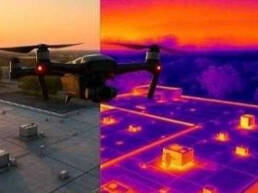
We use thermal drone imaging to find that hidden moisture on commercial roofs in St. Petersburg and Sarasota. A drone-mounted infrared camera scans the entire roof surface and shows where wet insulation is holding heat differently than the dry areas around it. Instead of guessing, building owners and property managers get a clear map of where the problems are and how far they reach.
How Thermal Imaging Finds Hidden Moisture
Wet insulation and dry insulation don’t hold heat the same way, and that difference is what an infrared camera picks up.
The Science Behind the Scan
- During the day, the sun heats the roof surface and the materials beneath it
- Wet insulation absorbs and holds more of that heat than dry insulation does
- As the roof cools in the evening, saturated areas release heat more slowly
- The infrared camera captures those temperature differences as visible patterns
Because the scan depends on that heating and cooling cycle, thermal roof inspections are typically flown in the evening after a clear, sunny day, when the contrast between wet and dry areas is strongest.
Confirming What the Camera Shows
A thermal image points to likely trouble spots, but it isn’t the final word on its own. We verify suspect areas with on-roof checks, such as moisture readings or small core samples, so the findings are confirmed before anyone makes a repair or budget decision.
Why We Use Drones for Commercial Roof Scans
Walking a large flat roof with a handheld camera is slow and can miss areas. A drone covers the full roof from above in a fraction of the time, capturing consistent infrared and standard images across every section.
That full view matters on commercial buildings, where moisture problems often sit far from the obvious leak inside. Seeing the whole roof at once makes it easier to spot patterns, like water spreading from a failed seam, a rooftop unit curb, or a drain that isn’t flowing properly.
Drone scans are also less disruptive. There’s less foot traffic on a membrane that may already be compromised, and the inspection rarely interferes with tenants or daily operations below.
Roof Types Thermal Imaging Works Best On
Infrared moisture scans are most effective on low-slope commercial roofs with insulation beneath the membrane.
Strong Candidates for a Thermal Scan
- TPO and other single-ply membrane roofs
- Modified bitumen roofs
- Built-up roofs
- Other low-slope systems over rigid insulation
If your building has one of these systems, our flat roofing team can also handle any repairs the scan uncovers.
Where Thermal Imaging Has Limits
Some roofs are harder to read with an infrared camera. Heavily ballasted roofs, highly reflective metal surfaces, and roofs without insulation beneath the deck can produce less reliable results. We’ll tell you upfront whether a thermal scan is the right tool for your roof or whether a different inspection approach makes more sense.




What You Get After the Scan
A thermal drone inspection is only useful if the results are easy to understand and act on.
Inside Your Inspection Report
- Thermal and standard aerial images of the roof
- Marked locations of suspected wet insulation, confirmed with on-roof checks
- An estimate of how much of the roof area is affected
- Notes on likely sources, such as seams, flashings, penetrations, or drains
- Clear recommendations for repair, recover, or replacement
We walk through the findings with you in plain language, so you know what’s urgent, what can be planned for, and what’s in good shape.
When a Thermal Roof Scan Makes Sense
Thermal imaging is most valuable at decision points, when knowing the true condition of the roof changes what you do next.
If you’re weighing whether to repair, recover, or fully replace a roof, a scan shows how much insulation is actually wet. A roof with limited moisture may only need targeted repairs, while widespread saturation usually means a recover is off the table. Either way, the decision is based on what’s really under the membrane.
A scan is also useful before buying or leasing a commercial property, after a hurricane or tropical storm, and as part of long-range capital planning. Pairing a thermal scan with our standard roof inspections and maintenance program helps catch moisture early, while repairs are still small. If a storm has already caused damage, we can combine the scan with our storm damage assessment to document what happened.
Our Process
- We schedule a thermal inspection and review your roof type, age, and any known leaks.
- We fly the drone scan at the right time of day for clear infrared contrast.
- We confirm suspect areas with on-roof moisture checks.
- You get a clear report and recommendations from the same team that can handle the repairs.
Concerned about hidden moisture in your commercial roof? Schedule an inspection and we’ll show you what’s under the surface.
Why Choose BC American Roofing for Thermal Drone Inspections
- Infrared findings confirmed on the roof, not just read from a screen
- Honest recommendations from a team that also handles commercial roofing repairs and replacements
- In-house supervision from the first scan to the final repair
FAQs
It shows temperature differences across the roof surface that point to wet insulation beneath the membrane. Those areas are then confirmed with on-roof checks so you know exactly where moisture is.
After a sunny day, wet insulation releases stored heat more slowly than dry insulation as the roof cools. That creates the clearest contrast for the infrared camera.
It works best on low-slope roofs with insulation, like TPO, modified bitumen, and built-up systems. Ballasted and highly reflective metal roofs are harder to read accurately.
Usually not. The scan is done from above, and on-roof verification is limited to the suspect areas, so there’s little disruption to tenants or operations.
Yes. Knowing how much insulation is wet is one of the biggest factors in whether targeted repairs, a recover, or a full replacement is the right call.
Get Your Free Quote
Hidden moisture doesn’t stay small, and the sooner you know where it is, the more options you have. Schedule an inspection and we’ll show you what’s really happening under your commercial roof.